
Experience from Triglav National Park to Support Sustainable Tourism and Nature Conservation in National Park Shar Planina
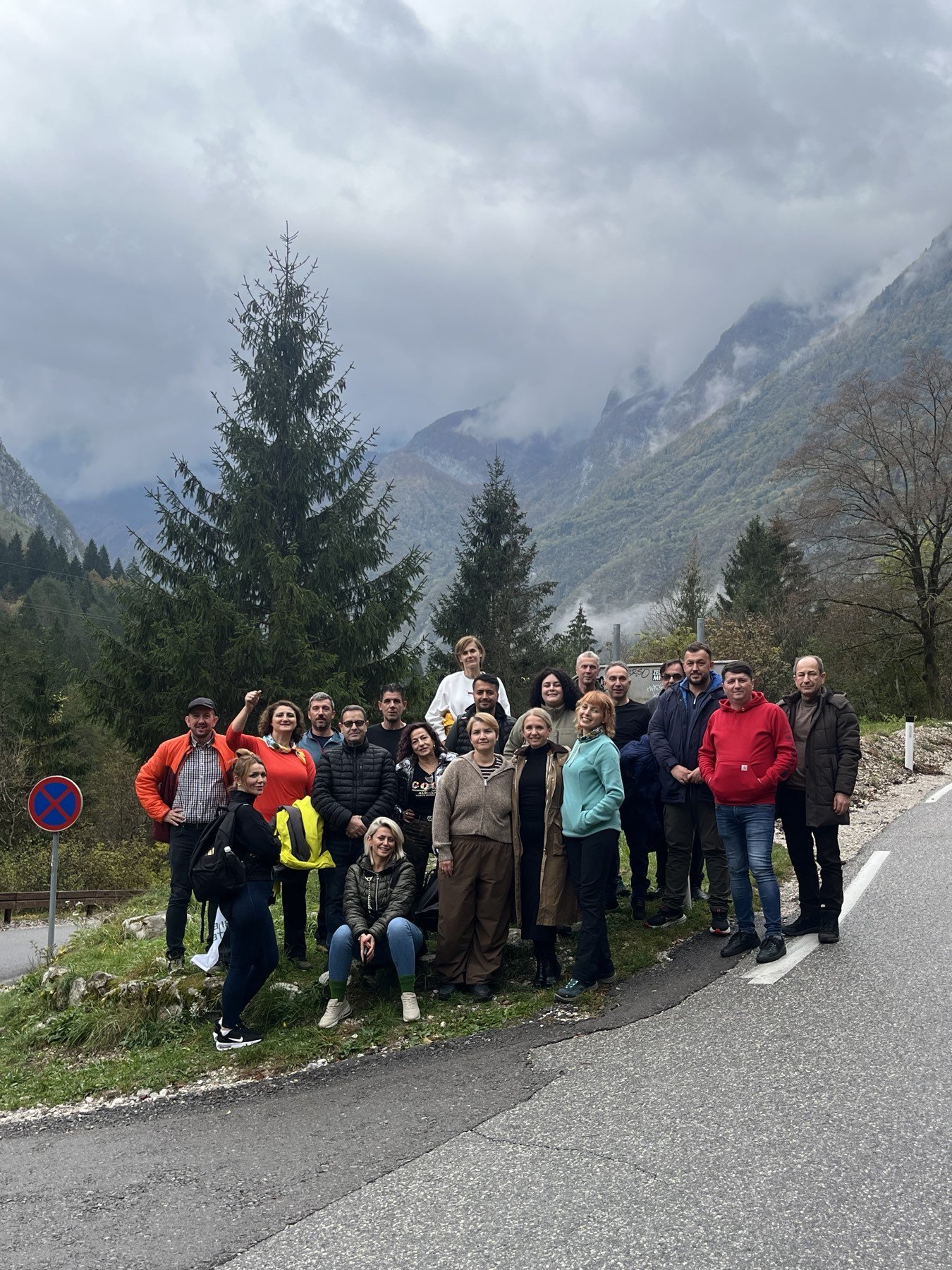
The study visit to Slovenia brought together institutions, municipalities and local stakeholders around a shared goal: developing tourism that conserves nature and benefits local communities.
Skopje, 22 October 2026 — Visitor management, biodiversity conservation and the involvement of local communities in sustainable tourism development were the focus of a study visit to Triglav National Park in Slovenia, held from 19 to 22 October. The delegation included representatives of municipalities located within or bordering National Park Shar Planina , relevant institutions and local stakeholders.
University American College Skopje organised the visit under the project “Biodiversity Conservation, Sustainable Land Management and Sustainable Tourism Development in North Macedonia”. The first phase maps the potential for sustainable tourism development in National Park Shar Planina, laying the groundwork for the next phase, which will develop a sustainable tourism strategy for the park.
The Ministry of Environment and Physical Planning, through the Administration of Environment and the Nature Department, is the project’s main partner and beneficiary of its results. Its involvement helps align project findings and recommendations with institutional priorities for nature conservation and the sustainable management of protected areas. The delegation also included a representative of the Ministry of Agriculture, Forestry and Water Economy.
Through expert presentations, discussions with Triglav National Park management in Bled, Trenta and Bohinj, and field visits, participants explored approaches to park management, zoning and protection regimes, environmental education and visitor information. The programme connected these topics with practical examples from Pokljuka, the Soča Valley and Bohinj, enabling an exchange of experience relevant to National Park Shar Planina.
“By exchanging practical experience and building long-term cooperation, parks can strengthen their capacities for nature conservation, visitor management and engagement with local communities,” said Uroš Brežan, Director of Triglav National Park, in his welcoming address.
Iskra Stojanova, Project Coordinator for the Western Balkans at the United Nations Environment Programme (UNEP), emphasised the need for cross-border cooperation among parks.
“Cross-border cooperation among parks is essential because nature and the challenges of conserving it extend beyond national borders. Through knowledge exchange, coordinated approaches and joint activities, we can conserve our natural heritage more effectively and create better conditions for sustainable development across the region,” said Stojanova.
Fjolla Halili, National Project Coordinator at UNEP, highlighted the organisation’s continued support for Shar Mountain National Park.
“UNEP in North Macedonia has been engaged since the establishment of Shar Mountain National Park, supporting its capacity development through a range of activities. This visit is part of that support and an opportunity to connect Triglav’s experience with the needs of the park and local communities,” said Halili.
During the visit, Igor Nikoski, Director of the Administration of Environment, and Saško Jordanov, Deputy Head of the Nature Department at the Ministry of Environment and Physical Planning, held discussions with Triglav National Park management on strengthening cooperation and exchanging experience in protected area management.
Makedonika Dimitrova, Team Leader, from the project implementing institution University American College Skopje, the project’s implementing organisation, highlighted the visit’s contribution to preparing the future sustainable tourism strategy for National Park Shar Planina.
“This visit is crucial for learning from successful examples at Triglav National Park and understanding how they can be adapted to the context of National Park Shar Planina. It provides a solid foundation for the next phase of the project, in which we will develop a sustainable tourism strategy grounded in nature conservation and the potential of local communities,” said Dimitrova.
Particular attention was given to experience from Bohinj, where participants learned about the Triglav National Park quality label, financial support mechanisms for local development and sustainable tourism management. A visit to a tourist farm provided a practical example of linking local food production with the tourism offering.
Altin Idrizi, project coordinator from the National Park Shar Planina highlighted the importance of the visit for continuing cooperation between the two parks.
“This visit will help strengthen the existing ties between Shar Mountain National Park and Triglav National Park and advance cooperation in visitor management and biodiversity conservation. Exchanging practical experience helps us identify solutions that we can apply in our own park,” said Idrizi.
The delegation’s closing meeting focused on lessons from the visit and opportunities to apply the approaches presented in Shar Mountain National Park. The knowledge gained will inform further work on the sustainable tourism strategy and help deepen cooperation among institutions, parks, municipalities and local stakeholders.